
"Change is the end result of all true learning." — Leo Buscaglia
True progress starts with understanding. Here, I break down the latest research so you don't have to navigate the noise alone. Let's translate evidence into practice and build a science-backed foundation for a better, healthier you.
The Science of Soy: Separating Metabolic Fact from Locker-Room Fiction
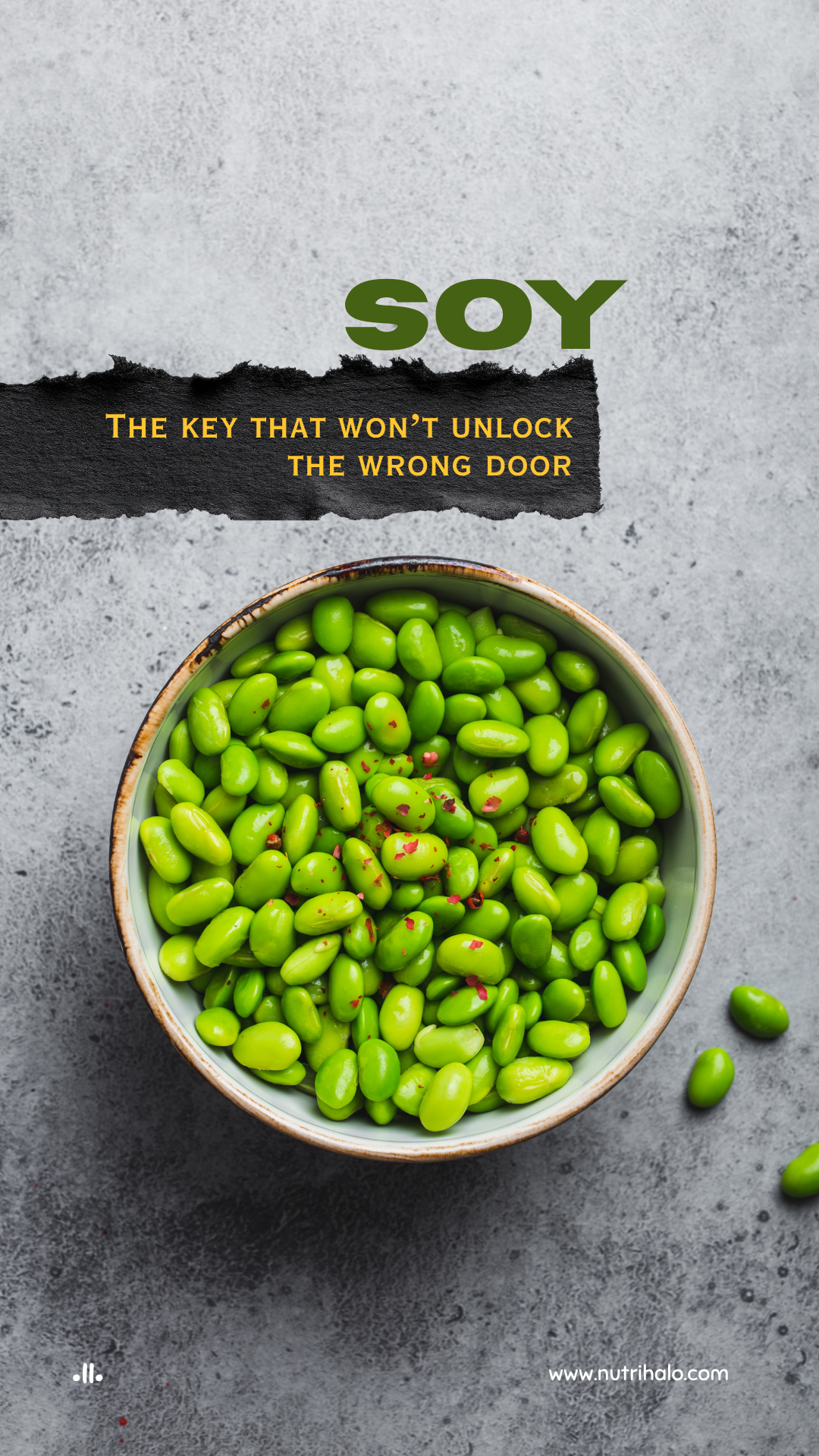
For years, a pervasive myth has circulated in gym culture: the idea that soy "feminizes" men by tanking testosterone and increasing estrogen. These stories are often anchored to isolated case reports, like the infamous 19-year-old who allegedly developed reproductive issues after consuming 360 mg of soy isoflavones daily.
As a researcher in nutrition and metabolism, I find it essential to look at the "why" and the "how" behind these headlines. When we move away from extreme anecdotes and toward large-scale clinical data, a very different picture emerges.
The "Lock and Key" Mechanism
The fear surrounding soy usually stems from a misunderstanding of isoflavones, the plant-based compounds (phytoestrogens) found in soy. To understand why these don't act like human estrogen, we have to look at the body’s hormone receptors, specifically ERα (estrogen receptor alpha) and ERβ (estrogen receptor beta).
Human Estrogen: Acts like a "master key." It binds to and activates both ERα and ERβ with equal affinity, triggering widespread systemic effects.
Soy Isoflavones: These are "selective keys." They preferentially bind to and activate ERβ. Because these two receptors are distributed differently throughout the body and exert different—sometimes even opposite—physiological effects, isoflavones do not replicate the hormonal impact of human estrogen.
What the Data Tells Us
When we analyze the actual evidence, the results are consistent: Normal soy intake has zero negative impact on male reproductive hormones.
A massive, expanded meta-analysis reviewed clinical studies measuring Testosterone (TT), Free Testosterone (FT), and Sex Hormone-Binding Globulin (SHBG). The consensus was clear: standard consumption of soy does not lower testosterone or negatively alter the male hormonal profile.
Beyond the Hormone Myth: The Functional Benefits
Far from being a threat, soy is a high-quality functional food with significant metabolic benefits:
Cardiovascular Health: Soy protein and its bioactive peptides have been shown to help lower LDL (the "bad" cholesterol) in individuals with high cholesterol levels.
Metabolic Regulation: Isoflavones may influence fat and sugar metabolism by interacting with PPARs (peroxisome proliferator-activated receptors)—the same receptors targeted by certain diabetes medications. They also interact with ERRs (estrogen-related receptors), which are involved in the body's fat-burning processes.
Prostate Health: Emerging clinical trials suggest that a phytoestrogen-rich diet may help reduce tumor proliferation in men with prostate cancer. Recent research indicates that these effects can even vary based on an individual's specific genetic profile (specifically ERβ polymorphisms).
The Bottom Line
The "soy scare" is a classic example of confusing extreme dosage with normal consumption. The isolated cases cited in media reports involve consumption levels up to 9 times higher than what is typical in even high-soy-consuming populations.
In the context of a balanced diet, soy is not a hormonal disruptor—it is a nutrient-dense, evidence-based tool for supporting metabolic and cardiovascular health. As we continue to study these molecular pathways, we are uncovering not a threat, but a highly sophisticated plant compound that works with our body's complex receptor systems, not against them.
References:
Ricketts, M. L., et al. (2005). Molecular mechanisms of action of the soy isoflavones includes activation of promiscuous nuclear receptors. The Journal of Nutritional Biochemistry.
Ahlin, R., et al. (2024). Effects of a Phytoestrogen Intervention and Estrogen Receptor β Genotype on Prostate Cancer Proliferation and PSA Concentrations.
Reed, K. E., et al. (2021). Neither soy nor isoflavone intake affects male reproductive hormones: An expanded and updated meta-analysis of clinical studies.